From Dull to WOW #3: Fixing Flat Blue Water with Depth and Separation in Lightroom

🐠 The Problem: “Everything Looks Blue… and Boring.”

If you’ve been shooting underwater for any length of time, you’ve probably encountered this common issue:
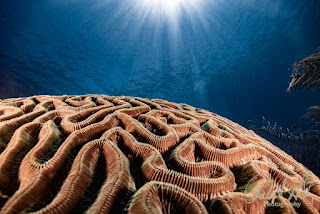
The scene appeared absolutely stunning during the dive, with layers of vibrant reef, diverse fish, and the mesmerizing depth of water. Beautiful rays of light piercing through the water added to the magic.
But once you open the image in Lightroom, it often falls flat:
👉 It looks flat blue, lacking vibrancy.
👉 There’s no clear separation between elements.
👉 It lacks depth, feeling two-dimensional instead of three.
👉 And it certainly doesn’t evoke that “WOW” reaction.
This blue-and-boring problem is one I see quite frequently, especially among Oceanic Explorers.
And here’s the key to fixing it: understand what’s causing the flatness and how to bring out the richness and contrast that made the scene so incredible in real life.
This is NOT a color problem first.
This is a tonal separation problem.
Water compresses contrast and reduces color as you go deeper.
As you descend underwater:
- Reds start to fade away
- Contrast diminishes
- Light begins to scatter
- The scene shifts toward a uniform blue tone
When your camera captures this, it records:
- Midtones stacked closely together
- Weak blacks
- Washed-out highlights
The result is an image where everything blends together, losing separation and depth.
This is not a failure of your camera. It is simply physics.
This is a natural consequence of light physics and the limitations of camera sensors under challenging conditions.
🔑 The Fix: Restore Depth Using Lightroom Workflow Order
This is where your system comes in.
We follow your proven sequence:
White Balance → Exposure → Presence → Color → Masking → Final
🧭 Step-by-Step: Turning Flat into Depth
Step 1: White Balance First (Always)

- Temp: +400 to +1200
- Tint: +5 to +20 magenta
🎯 Goal:
Neutralize the overwhelming blue so tones can separate properly.
Step 2: Build Tonal Separation (This Is the Game Changer)
They jump to color.
You don’t.

Adjust:
- Exposure: +0.3 to +0.5
- Highlights: –30 to –60
- Shadows: +30 to +60
- Blacks: –10 to –25
🎯 What you’re doing:
- Creating distance between tones
- Pulling foreground forward
- Pushing the background back
👉 This creates depth
Step 3: Presence Controls (Use Carefully)
Now we add structure.

Settings:
- Texture: +10 to +25
- Clarity: +5 to +15
- Dehaze: +10 to +25
⚠️ Warning:
Too much = crunchy, artificial look
🎯 Goal:
Aim to improve the edges and contrast to make the image more vivid and striking, while maintaining a realistic, natural, and convincing appearance.
Step 4: Color Refinement (Now It Matters)
Now that the tones are separated, color adjustments become much more effective and accurate.

Use Color Mixer:
- Reduce Blue saturation slightly
- Adjust Aqua toward green or blue, depending on the water
- Increase Orange/Red luminance for coral
🎯 Goal:
Natural color, not neon
Step 5: Masking (Where Depth Becomes Real)
This is where WOW happens.

Of course, what you mask depends on the image and what you want to focus on. You can use subject, background, or sky (water).
Below, I use "Subject".
Use:
- Select Subject
- Radial Gradient
- Background mask (invert subject)
Adjust:
Subject:
- Exposure +0.2
- Clarity +10
Background:
- Exposure –0.2
- Dehaze +5
🎯 Result:
- Subject pops forward
- Background recedes
- Image gains 3D depth
🐢 Final Result: From Flat to Dimensional
Now you have:
- Clear foreground vs background
- Controlled color
- Natural contrast
- Depth that matches what you saw
👉 This is the difference between a snapshot and a photograph
🌊 Final Thought
Most underwater photographers think:
“I need more color.”
What they actually need is:
Better separation.
Once you understand that:
- Depth becomes intentional
- Edits become repeatable
- Results become consistent
And that’s when your images go from:
👉 Dull
to
👉 WOW
🔗 Continue Your Workflow Journey
This post builds directly on your system and connects with:
- White Balance mastery
- Exposure control
- AI Masking workflows
For a deeper dive into each step, explore the related posts throughout the Back-to-Basics series.
🎁 CTA
Want my full step-by-step system?
👉 Grab the free guide:
“10 Lightroom Fixes Every Underwater Photographer Should Know.”
https://info.robertherb.com/lm-3
🌊 Take the Next Step
If this helped, the next step is to see it in action.
In my FREE Masterclass, I walk through this exact workflow step-by-step using real underwater images:
“Structure Before Drama: The Lightroom Workflow That Fixes Most Underwater Photos”
https://info.robertherb.com/lm-4-wait-list
📘 New here? Start with the full workflow:
The Complete Guide to Editing Underwater Photos in Lightroom
👉 https://robertherb.blogspot.com/2026/03/editing-underwater-photos-lightroom-guide.html
For those who want to go further, I also run small-group cohort sessions in which we apply this workflow directly to your images.
I’ll share details on upcoming sessions during the Masterclass.
👉 Want weekly tips like this delivered to your inbox?
https://info.robertherb.com/lm-2-blog
✍️Author
Written by Robert Herb
Empowering underwater photographers to capture and enhance the beauty of our oceans since 1978.
New blogs are published weekly with practical tips to help you transform your underwater photos from dull to WOW.
If you would like to go deeper, visit:
👉 www.RobertHerb.com
or reach out directly at: bob@robertherb.com
I always welcome your feedback and questions.
Bob Herb
|
|


Comments
Post a Comment
Please let me know your comments.